Test Yourself Sample Questions: Reading Grade 4
INSTRUCTIONS: Find out the correct answers to the questions by looking at the key for the multiple-choice questions or the scoring guide for constructed-response questions. See how your response compares to the actual national response data from the assessment.
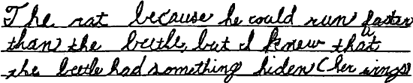
Question 1: Who did you think would win the race? Use information from the story to explain why.
|
|
Acceptable
|
|
|
These responses identify whom they thought would win the race and explain why with specific information from the story or with an appropriate observation about the story genre.
|
|
|
|
Unacceptable
|
|
|
These responses contain inappropriate information from the story, personal opinions about the story, or merely list a character's name. Unacceptable responses may also only answer one part of the question (i.e., Who? or Why?).
|
|
|
|
NOTE: Some acceptable responses may simply state that the fact that the beetle has wings indicated the beetle would win the race.
Also, some acceptable responses may simply state that the similarity between this story and other stories (does not have to be written text) led the student to conclude who would win the race.
|
|
|
|
Who did you think would win the race? Use information from the story to explain why.
|
|
|
|
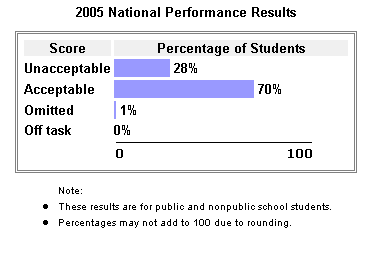
View the item map to see how this item, which is mapped at scale score 202, relates to the other items on the NAEP scale and to the NAEP achievement levels.
Question 2: Which best describes the beetle’s character?
| A. |
Greedy |
| B. |
Well-mannered |
| C. |
Helpful |
| D. |
Boastful |
Correct answer: B You responded:
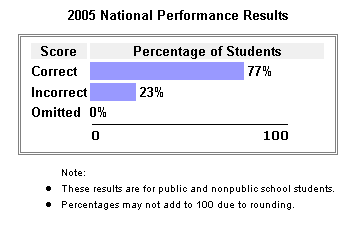
View the item map to see how this item, which is mapped at scale score 207, relates to the other items on the NAEP scale and to the NAEP achievement levels.
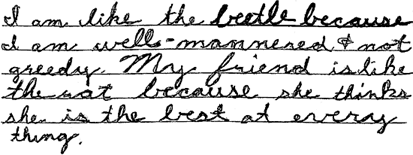
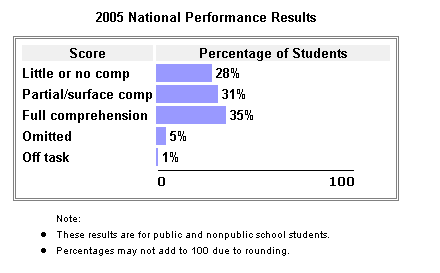
Question 3: Choose someone you know, have read about, or have seen in a movie or television show who is like the rat or the beetle. Explain how that person or character is like the rat or the beetle.
|
|
Evidence of full comprehension
|
|
|
These responses compare someone they know or a fictional character to either the rat or the beetle using a character trait as the basis of comparison. Responses at this level may include comparisons to the Tortoise or the Hare that are based on story action but the connection is fully explained in terms of character and plot.
|
|
|
|
Evidence of partial or surface comprehension
|
|
|
These responses provide some information about the rat or the beetle, but fail to make a comparison to someone they know or to a fictional character. Or, they attempt a comparison based on a character trait or some aspect of the story, but fail to link the trait to either the rat or beetle. (e.g., My friend is well-mannered.) Responses at this level also include comparisons that are based on a superficial aspect such as action (a race) or a physical characteristic (fast, slow, gray).
|
|
|
|
Evidence of little or no comprehension
|
|
|
These responses do not relate someone else to the rat or the beetle; or they make a comparison based on inappropriate characteristics; or they provide inappropriate information such as story summaries or personal opinions about the characters. These responses may also merely state that a character or person is like the rat or the beetle without giving a characteristic (e.g., Tweety is like the beetle. The rat is like the hare. My friend is like the beetle.)
|
|
|
|
NOTE: If the response compares the beetle and the rat to the tortoise and the hare, it should specify who is being compared to whom and provide specific character traits.
|
|
|
|
Choose someone you know, have read about, or have seen in a movie or television show who is like the rat or the beetle. Explain how that person or character is like the rat or the beetle.
|
|
|
|
View the item map to see how this item, which is mapped at scale score 270, relates to the other items on the NAEP scale and to the NAEP achievement levels.
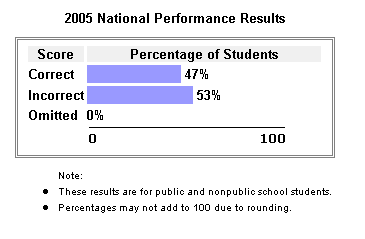
Question 4: The beetle chooses green and gold for the colors of her coat because they are
| A. |
unusual colors |
| B. |
her favorite colors |
| C. |
the colors the rat wanted |
| D. |
the colors of her world |
Correct answer: D You responded:
View the item map to see how this item, which is mapped at scale score 256, relates to the other items on the NAEP scale and to the NAEP achievement levels.