 Of the 16 districts that scored lower compared to national public, at least one student group in three of the districts (Charlotte, Houston, and Miami-Dade) scored higher than their peers in the nation.
Comparison of district and national average scores in NAEP science for eighth-grade public school students, by selected student groups: 2009
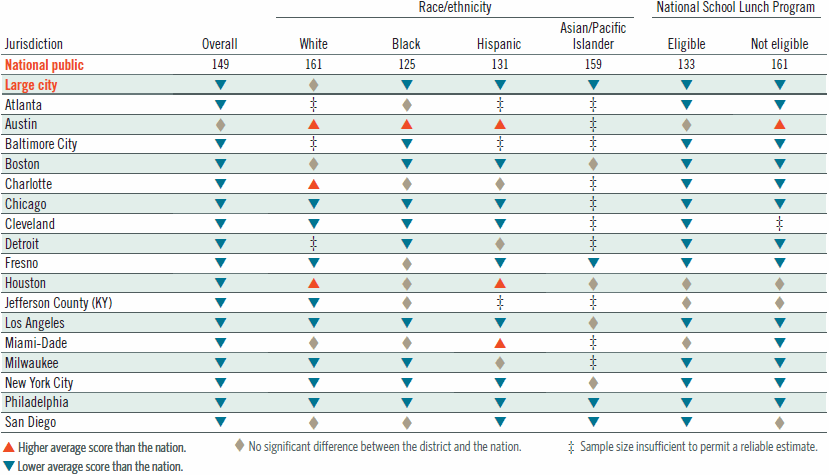
NOTE: Black includes African American, Hispanic includes Latino, and Pacific Islander includes Native Hawaiian. Race categories exclude Hispanic origin. See complete data for students overall, White students, Black students, Hispanic students, Asian/Pacific Islander students, students eligible for the National School Lunch Program, and students not eligible for the National School Lunch Program.
SOURCE: U.S. Department of Education, Institute of Education Sciences, National Center for Education Statistics, National Assessment of Educational Progress (NAEP), 2009 Science Assessment.